Chapter 23
The Lee Shore
Ishmael briefly honors Bulkington, whose courage lies in choosing the open sea over false safety.
Why it mattersThe chapter gives students one of Melville's clearest statements about danger and integrity. It also shows how even a minor character can become a philosophical emblem.
Some chapters back, one Bulkington was spoken of, a tall, newlanded marinernauticalA sailor or seafarer., encountered in New BedfordhistoricalThe Massachusetts whaling port where Ishmael first arrives before continuing to Nantucket. at the inn.
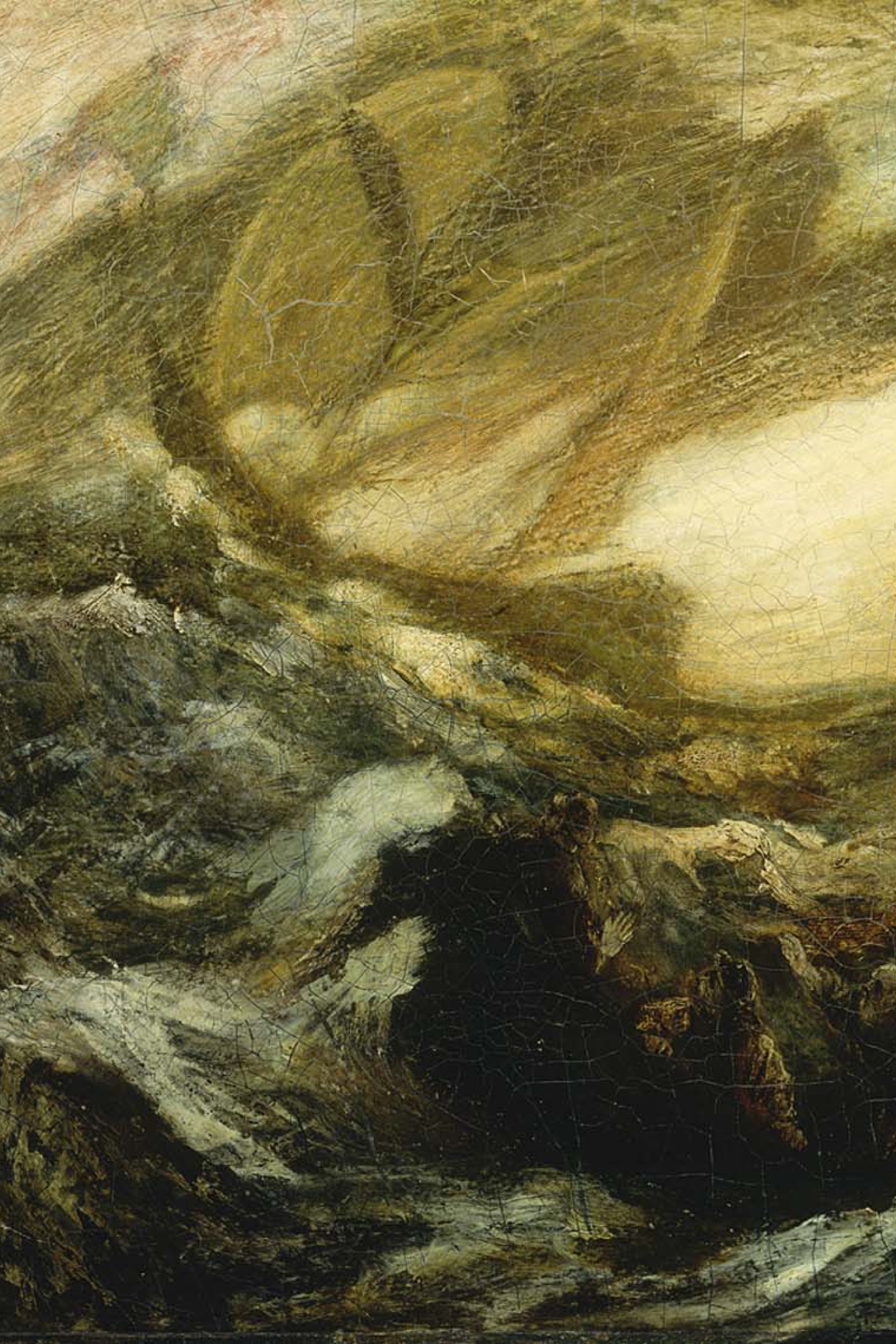
When on that shivering winter’s night, the Pequod thrust her vindictive bows into the cold malicious waves, who should I see standing at her helmnauticalThe steering apparatus of a ship; also the place or act of steering. but Bulkington! I looked with sympathetic awe and fearfulness upon the man, who in midwinter just landed from a four years’ dangerous voyage, could so unrestingly push off again for still another tempestuous term. The land seemed scorching to his feet. Wonderfullest things are ever the unmentionable; deep memories yield no epitaphs; this six-inch chapter is the stoneless grave of Bulkington. Let me only say that it fared with him as with the storm-tossed ship, that miserably drives along the leeward land. The port would fainvocabularyAn archaic adverb meaning gladly or willingly; in some contexts it shades toward being obliged or constrained to do a thing for lack of a better choice. give succor; the port is pitiful; in the port is safety, comfort, hearthstone, supper, warm blankets, friends, all that’s kind to our mortalities. But in that galenauticalA strong wind at sea, below hurricane force but still dangerous to ships., the port, the land, is that ship’s direst jeopardy; she must fly all hospitality; one touch of land, though it but graze the keelnauticalThe central structural beam along the bottom of a ship., would make her shudder through and through. With all her might she crowds all sail off shore; in so doing, fights ’gainst the very winds that fain would blow her homeward; seeks all the lashed sea’s landlessness again; for refuge’s sake forlornly rushing into peril; her only friend her bitterest foe!
Know ye, now, Bulkington? Glimpses do ye seem to see of that mortally intolerable truth; that all deep, earnest thinking is but the intrepid effort of the soul to keep the open independence of her sea; while the wildest winds of heaven and earth conspire to cast her on the treacherous, slavish shore?
But as in landlessness alone resides highest truth, shoreless, indefinite as God—so, better is it to perish in that howling infinite, than be ingloriously dashed upon the lee, even if that were safety! For worm-like, then, oh! who would craven crawl to land! Terrors of the terrible! is all this agony so vain? Take heart, take heart, O Bulkington! Bear thee grimly, demigod! Up from the spray of thy ocean-perishing—straight up, leaps thy apotheosis!